Playground of the World: Coney Island History
How a Brooklyn beach became the world’s most famous amusement zone.
Plan a New York TripPlayground of the World: Coney Island’s Story
Why do people still search for the Playground of the World and Coney Island together? Because for a few decades around 1900, no place on earth packed in more amusement. Three giant parks, electric lights by the hundred thousand and cheap rail fares turned a sandy Brooklyn shore into a nickname.
From resort to amusement capital
By the late 1800s railroads and steamboats brought New Yorkers to Coney Island’s hotels, bathhouses and beer halls. Fireworks displays began in 1883, and an early gravity ride, LaMarcus Thompson’s Switchback Railway, opened in 1884. Then came the great parks:
- Steeplechase Park (1897–1964), George C. Tilyou’s park, famous for its mechanical horse race and the Pavilion of Fun.
- Luna Park (1903), a fantasy city of towers and lights, badly damaged by fire in 1944 and closed soon after.
- Dreamland (1904), the grandest of all, destroyed by fire in 1911 and never rebuilt.
The People’s Playground
When the subway reached Coney Island — the Stillwell Avenue terminal opened in 1919 — a day at the beach cost a nickel fare each way. The Riegelmann Boardwalk opened in the early 1920s, the Wonder Wheel in 1920 and the Cyclone in 1927. Nathan Handwerker started selling hot dogs for a nickel in 1916. Coney Island became the playground of ordinary New Yorkers, with summer crowds that filled the beach from end to end.
Decline and comeback
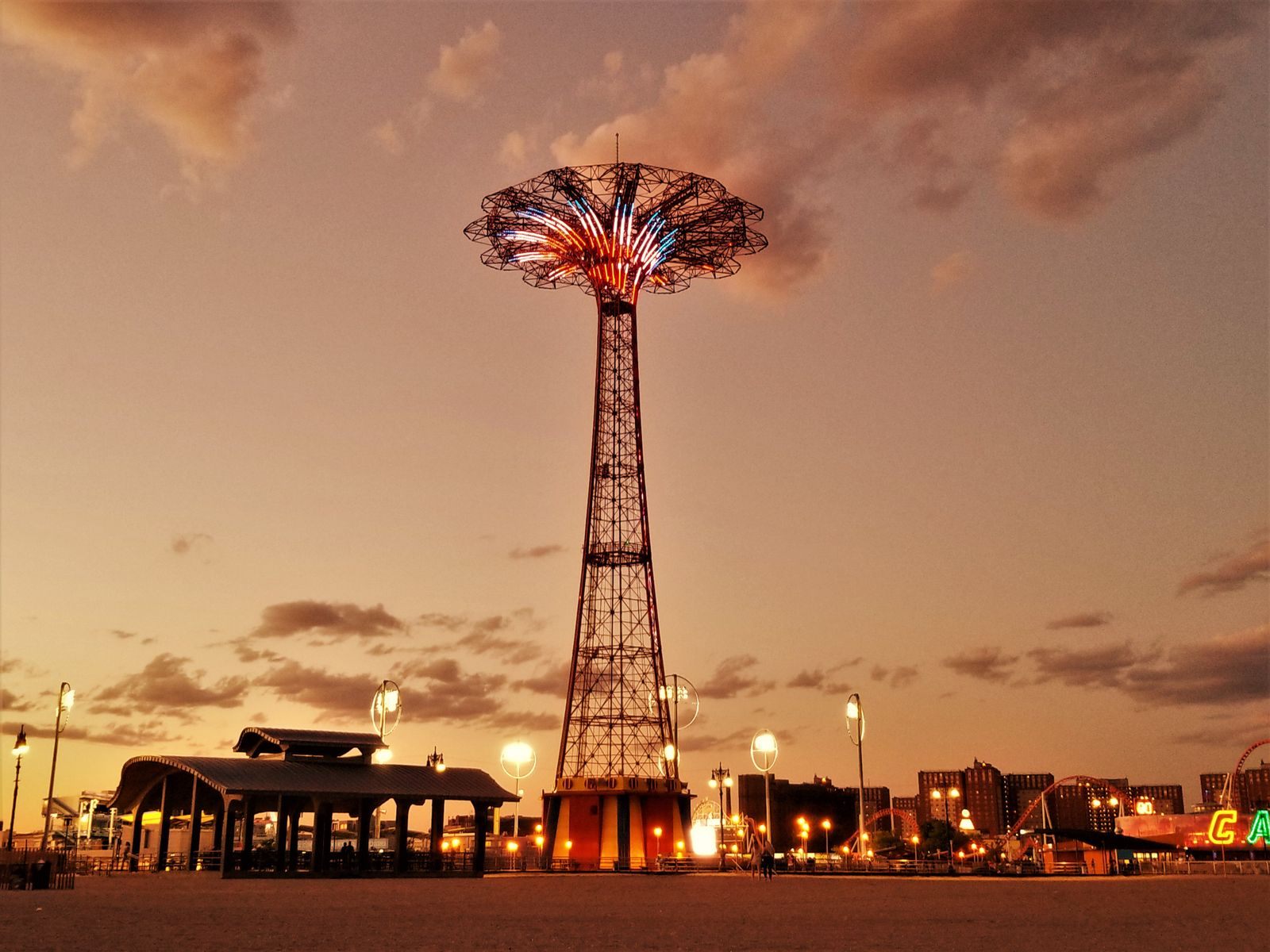
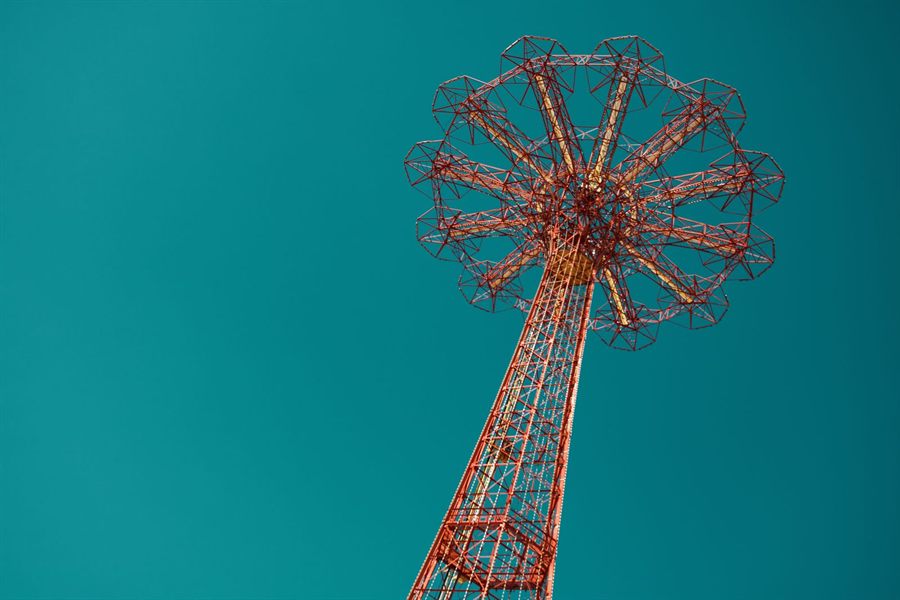
After World War II the old parks faded. Luna burned, Steeplechase closed after 1964 and the neighborhood struggled for decades. But the survivors held on, and the city protected them: the Cyclone was designated a New York City landmark in 1988, and the Wonder Wheel and Parachute Jump in 1989. The New York Aquarium had moved to the boardwalk in 1957; the Brooklyn Cyclones’ ballpark opened in 2001; and a new Luna Park opened in 2010, reviving the old name. After Hurricane Sandy flooded the area in 2012, the parks and aquarium rebuilt.
Then and now
| Then | Now |
|---|---|
| Steeplechase Park (1897–1964) | The Parachute Jump and Steeplechase Pier remain |
| Luna Park (1903–1944) | A new Luna Park, opened 2010, runs the Cyclone and Thunderbolt |
| Dreamland (1904–1911) | Gone; its spirit lives on in the sideshow and museum |
| Nickel subway rides to the beach | Four subway lines still end at Stillwell Avenue |
Frequently Asked Questions
Who called Coney Island the Playground of the World?
No single person is credited. Around 1900 Coney Island was called many playground names — New York’s playground, the people’s playground, the nation’s playground — and “Playground of the World” is the one that stuck as its nickname.
Is Atlantic City the Playground of the World?
Atlantic City has long been known as “America’s Playground,” and resorts around the world have used playground slogans. But “Playground of the World” is most closely tied to Coney Island.
What happened to Steeplechase Park?
Steeplechase Park, opened by George C. Tilyou in 1897, closed after the 1964 season. Its Pavilion of Fun was demolished in 1966. The Parachute Jump, which stood in Steeplechase, survives as a landmark.
See Coney Island for Yourself
Plan a New York trip with time for the boardwalk where it all began.
Get Free Trip Quotes